closedGrant
Hopper Prize 2026 – Global Artist Grant
Geschlossen
$1k – $5k
Global
Vollständige Ausschreibung ansehen
Discover the Hopper Prize 2026, an annual award offering significant unrestricted cash grants directly to visual artists across the globe, regardless of career stage.
This is one highlighted opportunity. GrantGunner lists many more like it - open the full listing for deadlines, eligibility, and how to apply, then explore the wider pipeline and switch on alerts for new matches.
In the intricate landscape of securing funding, grants that offer financial support without strings attached-unrestricted operating cash-are the true gold standard for creative professionals. They provide the autonomy necessary to pursue ambitious projects, upgrade essential studio equipment, or simply sustain life while deep in the creative process.
This week on GrantGunner Spotlight, we turn our attention to a highly valuable and globally accessible opportunity: the Hopper Prize 2026 - Global Artist Grant. Organized by The Hopper Prize, this award is intentionally designed to support the broad spectrum of visual makers worldwide by injecting essential, flexible capital directly into their hands.
This program represents a crucial resource, particularly as it bypasses geographical or institutional affiliations often imposed by other funding bodies. If you are a seasoned professional or an emerging talent pushing the boundaries of your discipline, understanding the structure and nuance of this award is the first step toward potential success.
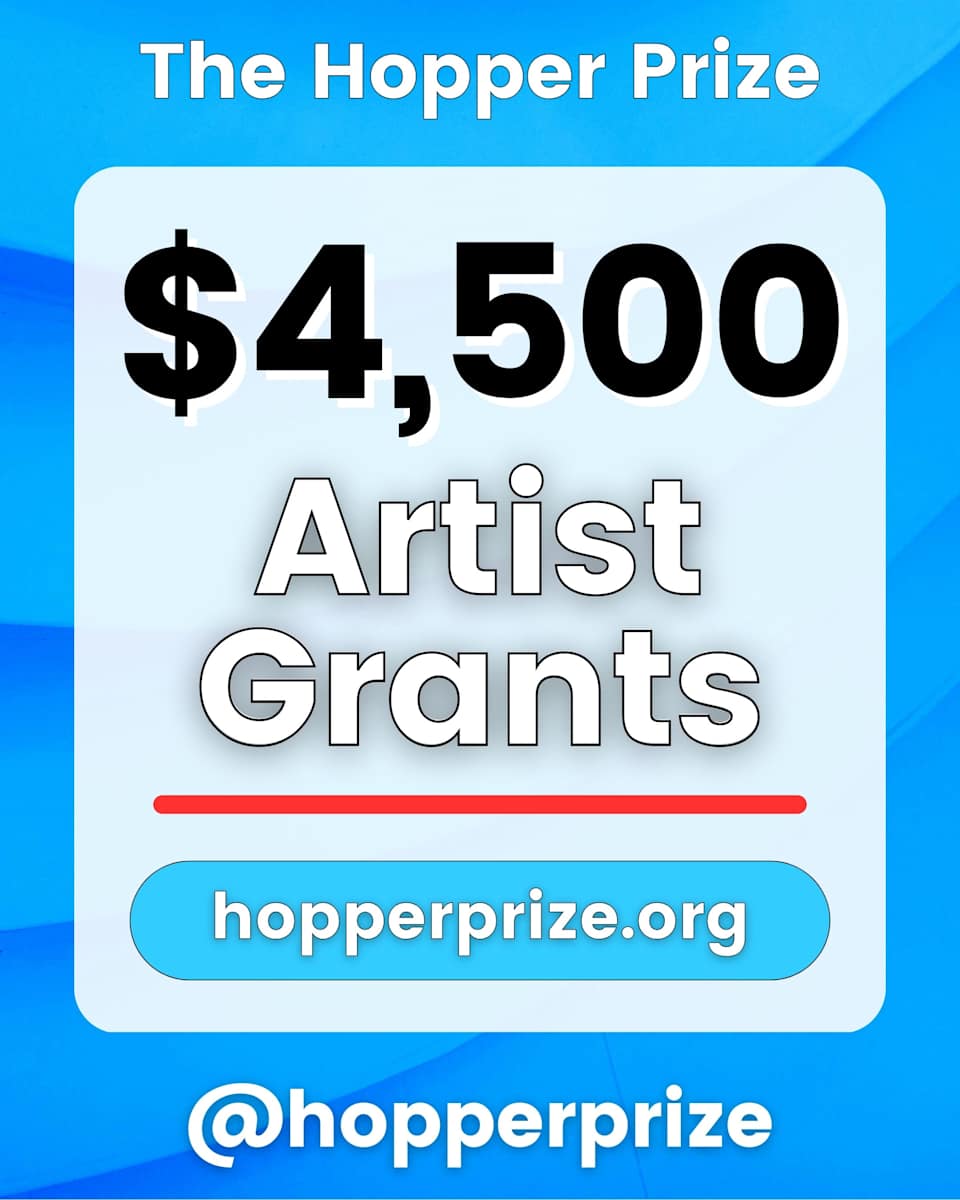
The Hopper Prize commits to distributing a substantial $26,000 USD in total unrestricted cash grants annually. This annual commitment is divided across two application cycles, ensuring a consistent flow of support to the arts community throughout the year.
For the artists selected, the benefit is immediate and flexible. The grants are distributed in specific tiers:
While the brief notes that 12 visual artists are supported annually in total, the distribution detailed across the cycles provides a clear picture of the immediate impact these awards have. Receiving a cash award of $4,500 or $1,000-funding that requires no mandated reporting on specific material purchases or project outcomes-offers supreme freedom. This money can cover studio rent, materials restocking, time dedicated solely to research, or even living expenses, allowing the artist to focus entirely on production and artistic development.
One of the Hopper Prize’s most appealing features is its radical approach to accessibility. Unlike many geographically restrictive grants or those tied to specific academic or institutional affiliations, the Hopper Prize casts an exceptionally wide net.
While the scope of accepted media is broad, artists aiming to apply must pay close attention to the one stated exclusion: the grant is open to visual artists working in any media except sound-based art.
For those working primarily in video, installation, painting, sculpture, photography, digital arts, or mixed media that does not rely centrally on sound components, this opportunity likely aligns perfectly with their practice. Always confirm your primary medium fits within the visual arts classification when reviewing the official application guidelines.
When an award emphasizes unrestricted funding, the selection criteria invariably lean heavily toward recognizing inherent artistic quality and viability. The Hopper Prize selection is based primarily on artistic excellence and future potential.
This means the review is not about what you have already achieved in terms of institutional validation, but rather the strength, rigor, and promise embedded within your current practice. For artists applying, this mandates a portfolio that speaks strongly to quality and a concise narrative outlining where your work is heading, supported by a compelling artist statement that articulates your vision.
Given the 2026 timeline (opening March 23, 2026, and closing May 12, 2026), you have ample time to refine your application materials. Here is how you can strategically position yourself for an award based on excellence and future promise:
Since the core judgment rests on excellence, your visual documentation must be impeccable.
“Future potential” requires you to articulate a trajectory. This is often where artists struggle-they describe what they do, not where they are going.
The application window opens in late March and closes in mid-May of 2026. This is a focused, non-rolling period. Missing the May 12th deadline means waiting for the next iteration of the award. Ensure your materials are finalized well in advance of the deadline to account for potential submission portal issues or final review passes.
This grant is an exceptional fit if:
If you are navigating the professional art world and need non-restricted capital to advance your practice without performance metrics tied to the grant, the Hopper Prize deserves serious attention.
We encourage all eligible artists to thoroughly review the complete requirements on the official organizer’s web portal. GrantGunner is here to help you manage your discovery process, allowing you to track this opportunity and streamline your application planning. You can explore the Hopper Prize 2026 listing and begin preparing your materials today.
Note: Specific details regarding application fees, required attachments beyond the portfolio/statement, and the exact mechanism for collaborative team submissions were not detailed in the summary brief. Please consult the official source for comprehensive instructions.
The primary source from which the details of this funding opportunity were extracted.
The direct link provided for artists to access the official application process.
Founders face a critical choice: grants or accelerators? Use these 7 questions to decide which path minimizes equity dilution and aligns with your startup's needs.
Most applicants rewrite the same financial, narrative, and governance information for every grant form. This deep dive unpacks how GrantGunner’s workspace and AI agents automate that repetition-without losing the control that funders and internal teams demand.
A geographic impact statement is one of the most important parts of a rural grant application. We answer five common questions about how to define your service area, back it up with data, and show funders exactly where your project will make a difference.