Back to Blog
researchersUN practitionersglobal challengesscience diplomacygrant fundingETH Zurich
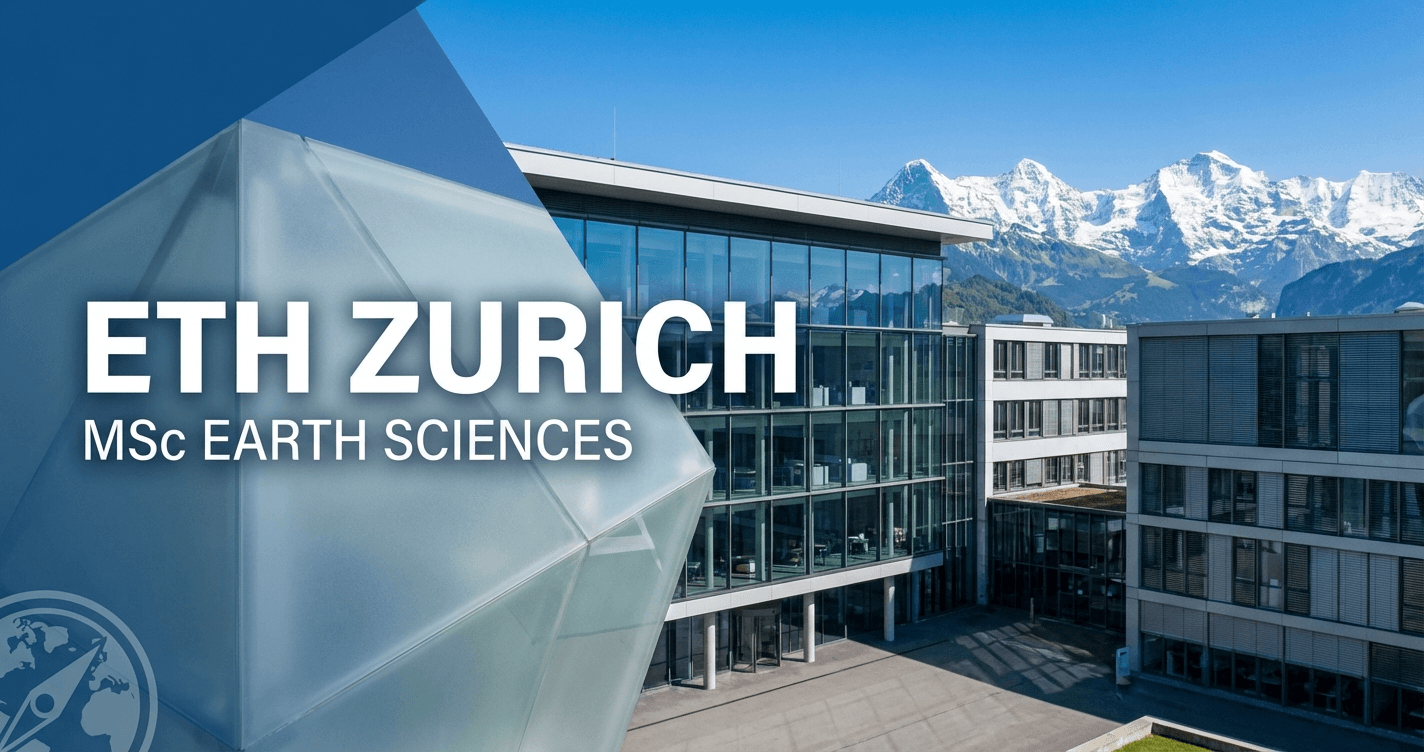
Bridging Worlds: The UN-ETH Incubator Ignites Global Change Through Science Diplomacy
The UN-ETH Incubator funds new collaborations between UN teams and ETH Zurich researchers to solve pressing global challenges. Proposals for the 2026 cycle are open from May 7 to July 5.
28 visualizzazioni
Featured funding opportunity
This is one highlighted opportunity. GrantGunner lists many more like it - open the full listing for deadlines, eligibility, and how to apply, then explore the wider pipeline and switch on alerts for new matches.
A New Model for Global Problem-Solving
In an era of complex, transnational challenges-from climate change and pandemics to inequality and digital divides-no single institution holds all the answers. The United Nations brings unparalleled policy reach, field presence, and mandate for global good. ETH Zurich offers cutting-edge research, engineering prowess, and scientific rigor. Yet these worlds too often operate in parallel. The UN-ETH Incubator exists to change that.
This innovative funding programme is designed to catalyse new project-based collaborations between UN teams and ETH Zurich research groups. By providing seed funding and institutional support, it helps turn joint ideas into real-world interventions that address the Sustainable Development Goals (SDGs) and create measurable societal impact.
What Is the UN-ETH Incubator?
The UN-ETH Incubator is a competitive call for proposals that invites paired teams of UN practitioners and ETH Zurich researchers to design and implement a short-term, high-impact project. The initiative is managed by ETH Zurich’s Office of the President, in close partnership with the UN Office in Geneva and other UN agencies.
Unlike traditional academic grants, the Incubator emphasises co-creation from the outset. Projects must be jointly conceived, jointly executed, and jointly evaluated. The goal is not just to produce a paper or a report, but to deliver a tangible output-a prototype, a policy brief, a data tool, a training module, or a proof-of-concept that can be scaled.
Key Dates and Funding Details
- Call opens: 7 May 2026
- Deadline: 5 July 2026 (firm, no rolling submissions)
- Funding amount: Variable, based on project scope (no fixed min or max publicly stated)
- Duration: Typically 6-12 months
- Eligibility: Teams must include at least one UN entity (agency, programme, or field office) and one ETH Zurich research group (professor-led).
There are no rigid geographic restrictions, but projects should address a global challenge with potential for UN-wide relevance. Applicants are encouraged to contact the UN-ETH coordination office early to refine their proposal.
Why This Matters Now
The call for 2026 arrives at a pivotal moment. The UN’s “Our Common Agenda” report and the 2024 Summit of the Future have underscored the urgent need for science-based, inclusive solutions. Meanwhile, ETH Zurich has been expanding its global engagement, notably through its network of “ETH for Development” (ETH4D) initiatives and its strong presence in Geneva, the heart of multilateralism.
By funding joint projects, the Incubator helps bridge the gap between the supply of scientific knowledge and the demand for actionable solutions within the UN system. It also nurtures a new generation of “science diplomats”-researchers and practitioners who speak both languages.
What Makes a Strong Proposal?
Based on past cohorts, successful proposals share several features:
- Clear problem definition rooted in a real need expressed by the UN partner.
- Complementary expertise - the ETH group brings technical or analytical firepower; the UN team brings contextual knowledge, access, and implementation pathways.
- Feasible scope - the project can be completed within a year and doesn’t rely on external funding beyond the Incubator award.
- Pathway to impact - how will the results be used, disseminated, or scaled within the UN system?
- Mutual benefit - both sides should gain new capabilities, publications, or operational improvements.
Examples from previous cycles have included:
- A machine learning model to predict food insecurity hotspots, built with the World Food Programme.
- A low-cost sensor network for air quality monitoring in refugee camps, developed with UNHCR.
- A behavioural science intervention to increase COVID-19 vaccine uptake, co-designed with WHO.
How to Apply
The application process is straightforward:
- Form the team: Identify your UN partner (or ETH lab, depending on your home institution).
- Develop a concept note (2-3 pages) outlining the challenge, approach, team, and expected outcomes.
- Submit via the official portal before 5 July 2026.
- Await evaluation: Proposals are reviewed by a joint UN-ETH committee. Shortlisted teams may be invited for a brief interview.
Full details and templates are available at the UN-ETH Incubator website.
The Bigger Picture
The UN-ETH Incubator is more than a funding mechanism-it’s a statement. It says that the world’s most pressing problems require collaboration across sectors, across borders, and across institutional cultures. It’s a bet on the power of science diplomacy to deliver concrete results.
For ETH researchers, it offers a rare opportunity to see their work applied in real time within the world’s largest multilateral system. For UN teams, it provides access to world-class science without the usual procurement hurdles. For the planet, it accelerates progress toward the SDGs.
Don’t miss this chance to turn your idea into impact. The window is short-but the potential is enormous.
Sources & References
- UN-ETH Incubator - Official Call Page
Full call details, eligibility criteria, and application portal for the 2026 cycle.
- ETH for Development (ETH4D)
ETH Zurich’s flagship programme for global development research, which often partners with the Incubator.
- UN’s Our Common Agenda
The UN Secretary-General’s vision for reinvigorating multilateralism, which the Incubator directly supports.
More from the blog
View all postsgrant-writingai-agentsform-filling
The Hidden Reuse Engine: How GrantGunner’s AI Agents Eliminate Repetitive Form-Filling
Most applicants rewrite the same financial, narrative, and governance information for every grant form. This deep dive unpacks how GrantGunner’s workspace and AI agents automate that repetition-without losing the control that funders and internal teams demand.
99 visualizzazioni
innovate uk smart grantstrlai prototype
Inside a Winning CliniQ Application: Matching AI Prototype TRL 5 to an Innovate UK Experimental Development Round
Follow healthtech startup CliniQ as they diagnose their AI prototype at TRL 5 and match it to the exact Innovate UK Smart Grant round that funds the leap from sandbox to integrated clinical system. Each decision, mistake, and pivot reveals how TRL precision turns a strong concept into a fundable application.
167 visualizzazioni
Public sectorClean energyBuilding renovation
Turnkey Clean Energy: How Up to €9M from LIFE-2026-CET-OSS Can Help You Build a Winning One-Stop Shop
The EU LIFE Programme is offering up to €9 million per project to establish integrated one-stop-shops that help private building owners transition to clean energy. Deadline: 16 September 2026.
171 visualizzazioni