
closedResearch Grant
Frontier AI Discovery
Gschlosse
£150k – £250k
 UK Kontext
Vollständigi Ausschreibig aaluege
Unlock £25k-£50k in early-stage funding to test the feasibility of groundbreaking AI and foundation models aligned with UK strategic priorities.
This is one highlighted opportunity. GrantGunner lists many more like it - open the full listing for deadlines, eligibility, and how to apply, then explore the wider pipeline and switch on alerts for new matches.
The landscape of Artificial Intelligence is rapidly evolving, moving beyond commercial applications toward fundamental scientific breakthroughs. Recognizing the immense strategic importance of mastering Frontier AI and Foundation Models, Innovate UK has launched the Frontier AI Discovery programme. This initiative is specifically designed to inject capital into the earliest stages of research, ensuring that the UK maintains a competitive edge in developing the core enabling technologies of tomorrow.
This spotlight examines this upcoming opportunity, detailing who should prepare to apply, what kind of work is eligible, and how to position your project for success in this crucial feasibility phase.
It is vital for potential applicants to understand that the Frontier AI Discovery competition is a Phase 1 feasibility study grant. This is not an opportunity to fund full product development or large-scale commercialization efforts. Instead, Innovate UK seeks proposals that focus on early-stage exploration, technical validation, and scientific proof-of-concept for highly novel AI or Machine Learning (ML) concepts.
Key Programme Parameters:
This model is designed to rapidly de-risk promising fundamental research. Furthermore, successful Phase 1 feasibility studies are intended to act as springboards, informing the development of potential Phase 2 consortia, which will see significantly larger awards ranging from £5 million to £10 million.
To qualify for this funding, your proposed feasibility study must align with one of four clearly defined strategic missions. These missions represent areas where the UK government has identified pressing national need or high potential for transformative impact through advanced AI.
This mission targets the use of frontier AI/foundation models to accelerate discovery, diagnosis, or treatment within the complex fields of health and biology. This could involve novel ways to model protein folding, analyze complex genomic data sets, or simulate biological interactions at a scale previously unattainable.
Here, the focus shifts toward using advanced AI techniques to design, discover, or optimize new materials with specific desired properties. This is crucial for sectors ranging from sustainable energy solutions to high-performance manufacturing. The feasibility study might focus on new algorithms for predicting material stability or accelerating the simulation of quantum interactions.
This strategic area demands robust, explainable, and trustworthy AI systems designed to address highly sensitive challenges. Proposed feasibility studies must tackle the technical validation of foundational models pertaining to security, resilience, or advanced defence applications, requiring rigorous scientific exploration before any real-world deployment.
For researchers focused purely on advancing the mathematical, computational, or theoretical understanding of AI itself, this stream provides support. This mission allows for exploration into novel network architectures, improved training methodologies for foundation models, or developing entirely new paradigms for machine learning that push the scientific boundary, irrespective of immediate application.
The Frontier AI Discovery programme casts a wide net designed to capture innovation across the entire UK research and business ecosystem. Crucially, only entities legally registered in the UK are eligible to apply.
Eligible applicants include:
For this initial feasibility stage, a key requirement is that applicants must work alone. While subcontracting is permitted, it must be limited to a maximum of 30% of the total eligible project costs. This structure suggests Innovate UK wants to see clear ownership and direction from the lead applicant during this initial scientific validation phase.
Furthermore, organizational capacity is managed by limiting submissions: Lead organisations can submit only one application in this entire competition series.
Given the opening date of April 2026, now is the perfect time to begin focused preparation. Successful grant bids, especially those backed by government bodies like Innovate UK, require alignment between your innovative idea and the funder’s strategic priorities.
Your project must be novel. Since this focuses on frontier models, reviewers will look for research that genuinely advances the state-of-the-art, not incremental improvements on existing technologies.
Action Step: Map your proposed feasibility study directly against one of the four strategic missions. Can you articulate, in one sentence, how your technical validation advances Health/Life Sciences, Materials, Defence, or Fundamental AI theory?
As the funding is only for feasibility (£25k-£50k over three months), the scope must be narrow yet high-impact. Avoid proposals that attempt to build a usable prototype. Instead, focus the budget and time on answering one critical technical question or validating one core hypothesis about the new AI model or technique.
Practical Tip: Structure your three-month plan with clear, measurable milestones. What specific scientific outcome proves feasibility? Keep the budget lean and focused exclusively on the necessary research activities (personnel time, compute costs, essential materials).
While Phase 1 is standalone, the pathway to Phase 2 (£5m-£10m) is an implicit consideration. Your feasibility study should generate critical data and scientific credibility that would naturally lead to a much larger, potentially collaborative, project in the future. Think about what crucial questions your three-month study will answer that position you well for a large consortium bid later.
Ensure your UK registration status is current and confirmed. For academic or charity applicants, demonstrate clear access to the required computational resources or data infrastructure needed to conduct the feasibility study, even if the primary cost requested is personnel time.
Innovate UK competitions are highly sought after, and the application process requires precision. You can track the official opening and closing dates, review the full scope documents, and monitor updates for this specific opportunity-Frontier AI Discovery-directly on the GrantGunner platform. We empower you to manage your discovery process efficiently so you can focus your internal resources on developing a world-class proposal.
The Frontier AI Discovery programme is a vital injection of seed funding aimed squarely at the core technological advancement necessary for future societal benefits and national security. If your organization is poised to conduct high-risk, high-reward feasibility testing on foundational AI models within a strategic UK focus area, prepare your readiness now for the April 2026 opening.
The primary listing detailing the grant competition overview and dates.
The official Innovate UK portal where detailed application materials will be hosted.
Think you need a working prototype before applying for Innovate UK funding? Wrong. Most Innovate UK grants are explicitly designed for early-stage, unbuilt technology - and having a finished product might actually disqualify you.
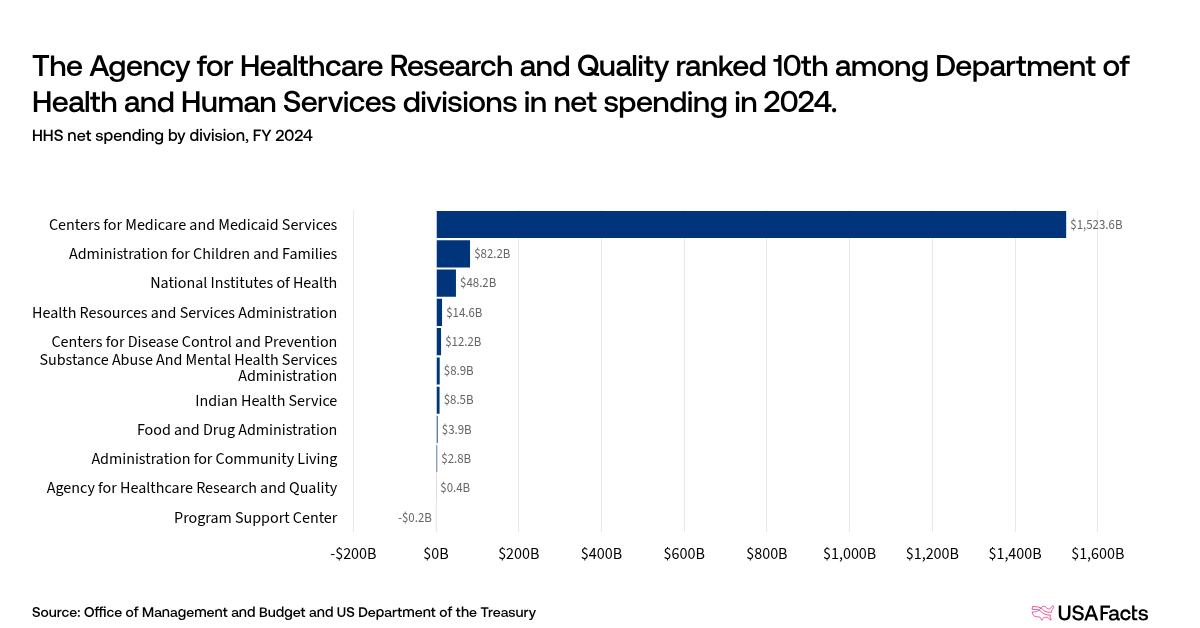
The AHRQ R36 program supports doctoral candidates conducting health services research for their dissertation, providing up to $50,000 in funding. This blog post explores eligibility, application tips, and how this grant can jumpstart your career.
A common myth claims that churches, mosques, and temples cannot access National Lottery or government community grants. We break down the facts, eligibility rules, and real-world examples to show how faith-based groups can - and do - secure funding for inclusive, secular projects.